


.svg)
.svg)


.svg)

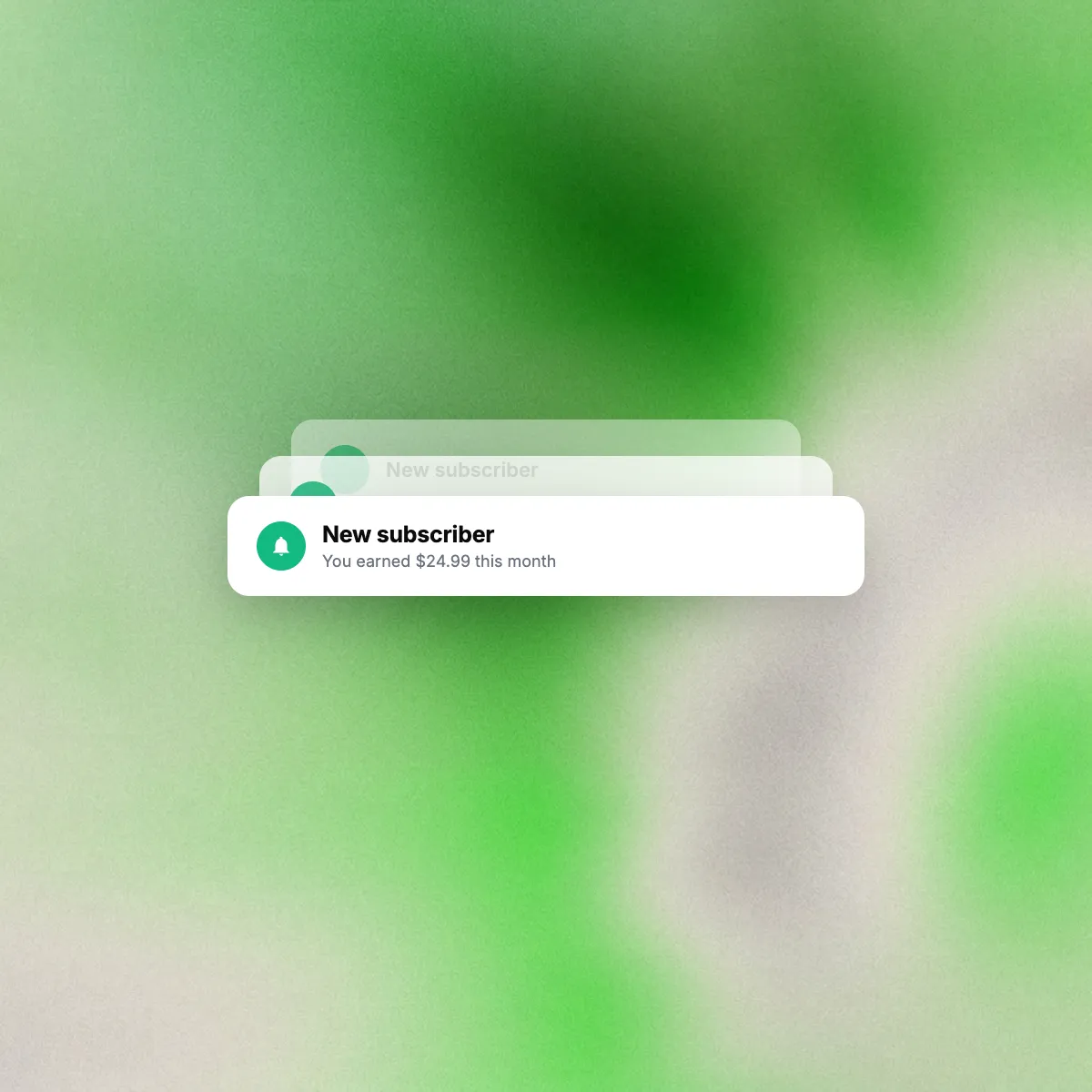
You and another creator can both make $5,000/month and still be in very different positions. You may need 1,000 subscribers paying $5 to get there, while the other reaches the same income with 200 subscribers paying $25.
You’re managing more churn, more pressure, and more low-intent fans just to maintain that income, while the other is building with fewer, more committed fans who stay longer and spend more consistently.
This is where many creators limit their own growth. They think of pricing like a “safe” number, something low enough to avoid rejection, instead of what it really is: a growth lever that defines what kinds of fans you attract and how (or if) your creator business scales.
Underpricing doesn’t just lower your income. It can attract discount-driven fans, weaken commitment, and make long-term growth far harder than it needs to be.
In this guide, you’ll learn how pricing actually works, how to set it based on real signals instead of unfounded fears, and how to optimize it over time.
The Thinking Error That Leads to Underpricing
Most creators underprice because they have a flawed idea: “If I make my subscription cheaper, more people will buy. If more people buy, I’ll grow faster.”
Now this may sound like a smart growth strategy, but most times, it’s fear disguised as strategy. For many creators, underpricing is rooted in subconscious patterns:
- Fear of losing subscribers: “No fan will subscribe if I charge more.”
- Fear of not being big enough yet: “I need more followers before I can raise my prices.”
- Fear of being perceived negatively: “If I charge more, fans will think I’m greedy.”
- Fear of not delivering enough value: “My content isn’t valuable enough to justify charging more.”
This is where a common mistake happens: Creators start pricing for approval instead of business growth. Instead of asking, “What pricing strategy helps me build stronger revenue, better fans, and a more sustainable business?” many end up asking, “What price feels low enough that fans would be willing to pay?”
And when pricing decisions are centered only around getting more people in, creators overlook the factors that actually determine long-term success:
- The kind of fans you’re attracting
- How long they stay
- How they spend, engage, and convert over time
A fan who pays more, stays longer, tips regularly, and values connection can dramatically outperform multiple low-cost subscribers who join quickly but leave just as fast. So success is never just about the number of followers alone.
That’s why strong creator businesses are built around growth pricing, not survival pricing.
Survival pricing focuses on:
- Minimizing rejection
- Lowering perceived risk
- Getting anyone and everyone in
Growth pricing focuses on:
- Maximizing value
- Attracting stronger-fit fans
- Building healthier retention and monetization
Whether your creator business stays fragile or becomes scalable depends heavily on this choice.
What You Charge Impacts Far More Than What You Earn
Your subscription price is the infrastructure that shapes the kind of creator business you eventually build.
Pricing influences how your brand is perceived.
A lower price point can make your subscription feel more accessible, but it can also create a more casual perception around your offer. On the other hand, a higher price point, when backed by real value, often signals premium access, deeper connection, or a more exclusive experience.
Pricing also affects what kind of fans you attract.
The price = value psychology means pricing determines who subscribes: i.e., audience quality.
Creators with lower pricing often build larger audiences faster, but those audiences may be more passive, price sensitive, or transactional. Creators with higher pricing may attract fewer subscribers upfront, but those fans are likely more invested in access, exclusivity, and ongoing connection.
This difference can have a huge impact on how much pressure your business puts on you every day: because pricing doesn’t just affect what you earn; it also affects how hard you have to work to earn it.
For example, creators who rely on very low pricing quickly realize that they need constant subscriber growth, non-stop content output, and a heavier day-to-day workload just to maintain stable income.
In contrast, creators who build around stronger pricing or premium tiers often gain more breathing room. They earn more per subscriber, rely less on constant acquisition, and can scale through retention, upsells, and deeper fan relationships.
This is also how pricing directly impacts long-term scalability.
If your business model depends entirely on adding more subscribers every month, your income becomes less predictable and harder to stabilize. But if each subscriber delivers stronger long-term value, your business becomes far more stable and scalable.
And that’s why connection is so important. Fans who feel connected to you engage more and buy more. In fact, engaged fans are 63% more likely to stay longer than the average subscriber.
The key takeaway is this. A smaller audience that’s genuinely invested in you can outperform a much larger audience that simply subscribed because the price felt cheap enough.
How to Price Strategically Instead of Emotionally
Strategic pricing is about using elements like business stage, positioning, controlled testing, and audience signals to build the strongest monetization structure possible for your creator business.
This is where many creators stall. Instead of pricing strategically, they often default to what feels emotionally safer:
- Choosing the lowest number possible out of fear or self-doubt
- Reacting impulsively to slow growth by lowering prices
- Blindly copying what other creators charge
To break out of this mindset, you need a structured pricing framework. Here’s how to approach it, starting with how your pricing should shift as you go from building traction to scaling your business.
The pricing strategy shift from starting out to scaling up
Before you lock in a price, start by identifying the stage of business you’re in right now. That shows up in signals like:
- Audience trust
- Engagement depth
- Proof of demand
- Content and access value
- Monetization maturity
These signals should guide how you position and price your subscription.
For example, starting on the lower end can be a smart strategic move only if you’re still in the early stage, when:
- You’re testing whether your niche can reliably convert.
- You’re still building trust with your audience.
- You have limited paid demand data.
- You need real market feedback before optimizing upward.
For creators in this stage, pricing in the $7.99–$14.99 range can create enough accessibility to test demand, gather conversion data, and build early monetization momentum without severely undervaluing your offer.
In contrast, you may be ready to move into stronger pricing tiers if:
- Your engagement rates consistently outperform platform benchmarks (~2–5%).
- Your fans regularly DM, tip, or purchase premium content.
- You offer strong exclusivity, premium access, or personalized interaction.
- Subscriber retention remains strong beyond early sign-up periods.
- Your fans actively seek deeper access, stronger connection, or VIP-style experiences.
For example, the following are strong indicators that your pricing may have room to grow:
- Your subscribers are consistently staying beyond 6–12 months
- They’re spending beyond base subscription
- Fans are engaging with you regularly
At this stage, staying locked into entry-level pricing may actually suppress your long-term revenue potential.
This is where pricing should begin shifting from accessibility-focused to value-and-positioning-focused.
Where to start when you’re pricing from scratch
Once you know whether you should start lower or aim higher, the next step is setting a number. At this stage, the goal isn’t to magically land on the “perfect” number right away. It’s to set a strategic baseline you can optimize from.
Step 1: Choose your pricing bracket
Before choosing an exact number, first decide how you want to position your subscription overall. Are you building an entry-level offer, a balanced mid-tier subscription, or a premium experience?
*Pricing will vary depending on your niche and audience, but these ranges can help guide your initial positioning.
Your pricing bracket should reflect both the maturity of your creator business and the level of access or experience you’re realistically offering.
Step 2: Choose your actual starting number (and price slightly above your fear threshold)
Once you’ve chosen your pricing bracket, it’s time to land on your actual starting number.
Start by researching creators in your niche with similar:
- Audience size
- Engagement strength
- Content style
- Access or exclusivity level
- Monetization maturity
Your goal here is to understand the realistic pricing range your audience already sees as acceptable, so you can position yourself strategically.
For example, if similar creators are charging $14.99–$29.99/month, many new creators may instinctively undercut the market by pricing at $7.99 or $9.99 simply because it feels safer. But a stronger move is to price slightly above what feels safest: closer to $14.99.
This builds stronger perceived value, attracts more committed fans, and gives you healthier long-term monetization room without pricing yourself too aggressively.
A strong starting price should:
- Push slightly beyond your emotional comfort zone
- Feel realistic for the value and access you offer
- Signal enough value to create fan commitment
Step 3: Commit to a controlled test period
Don’t lock in your first pricing point permanently. Validate it over time.
Run a controlled test period with your set pricing for at least 30 days (or however long you need to gather meaningful behavioral data) before either fully committing to a long-term price or making adjustments.
How you test should depend on your current stage.
As you test, keep an eye on:
- Conversion
- Churn
- Engagement
- Revenue per subscriber
Done well, this stage creates a far stronger foundation for your future monetization decisions.
Step 4: Adjust based on performance
Once you’ve gathered enough data, the next step is optimization. Your pricing strategy should evolve based on audience signals: how your fans actually ended up behaving.
Where you want to reach is scenario 4: strong conversion, healthy retention, and growing spend. If you’re not there yet, continue to refine your pricing strategy.
Your Subscription Price Should Match Your Bigger Vision
In the 2026 creator economy, the strongest creators don’t price their businesses by guessing or by avoiding risk. They test, learn from fan behavior, and adjust pricing strategically.
Your subscription price shouldn’t be based on fear either. Treat pricing like an evolving system and continuously refine it to support the scale, audience, and brand you ultimately want to build.
Because in the long run, the right pricing strategy influences far more than just revenue. It helps you build deeper fan commitment, stronger retention, and more sustainable growth.

.webp)

.svg)

.svg)
.svg)
.svg)
.svg)
.svg)
.svg)
.svg)